








Experience Las Hogueras de San Juan: Alicante’s biggest celebration
Published 25/05/2026
We’ve put together a short guide to help you experience Las Hogueras de San Juan in Alicante, with the key moments you need to know about so you can make the most of your visit during the city’s most magical week.
Las Hogueras de San Juan in Alicante is a spectacular celebration that fills every corner of the city with music, fleeting works of art and deep-rooted tradition. It is one of those experiences you really should enjoy at least once, and with that in mind, here are a few essentials to help you get the very best out of it.
What dates are Las Hogueras de San Juan?
The official celebrations take place from 20 to 24 June, although the days leading up to them are filled with fireworks displays and events such as the Desfile del Pregón. Then, once the festivities come to an end, a spectacular fireworks competition lights up Postiguet beach every night at midnight from 25 to 29 June.
What happens during Las Hogueras de San Juan?
You’ll find Alicante divided into districts, each organised by its own festival committee. Every committee sets up two monuments: the main hoguera, also known as a foguera, and the children’s one. Next to them, you’ll see the barracas, which are lively social spaces made for celebrating, eating and spending time together, each with a decorative entrance created by the foguerers artists.
As for the programme, these are the key moments of Las Hogueras de San Juan to keep in mind:
-
The Plantá, 20 June: this is when the monuments are finally put in place, ready to be burnt in keeping with old summer solstice traditions. Nowadays, they are colourful, beautiful works of temporary art. From this day onwards, it is much easier to get around the city centre on foot.
-
The mascletá: every day at 2 pm in Plaza de los Luceros, you can feel the full force of this must-see gunpowder sound show.
-
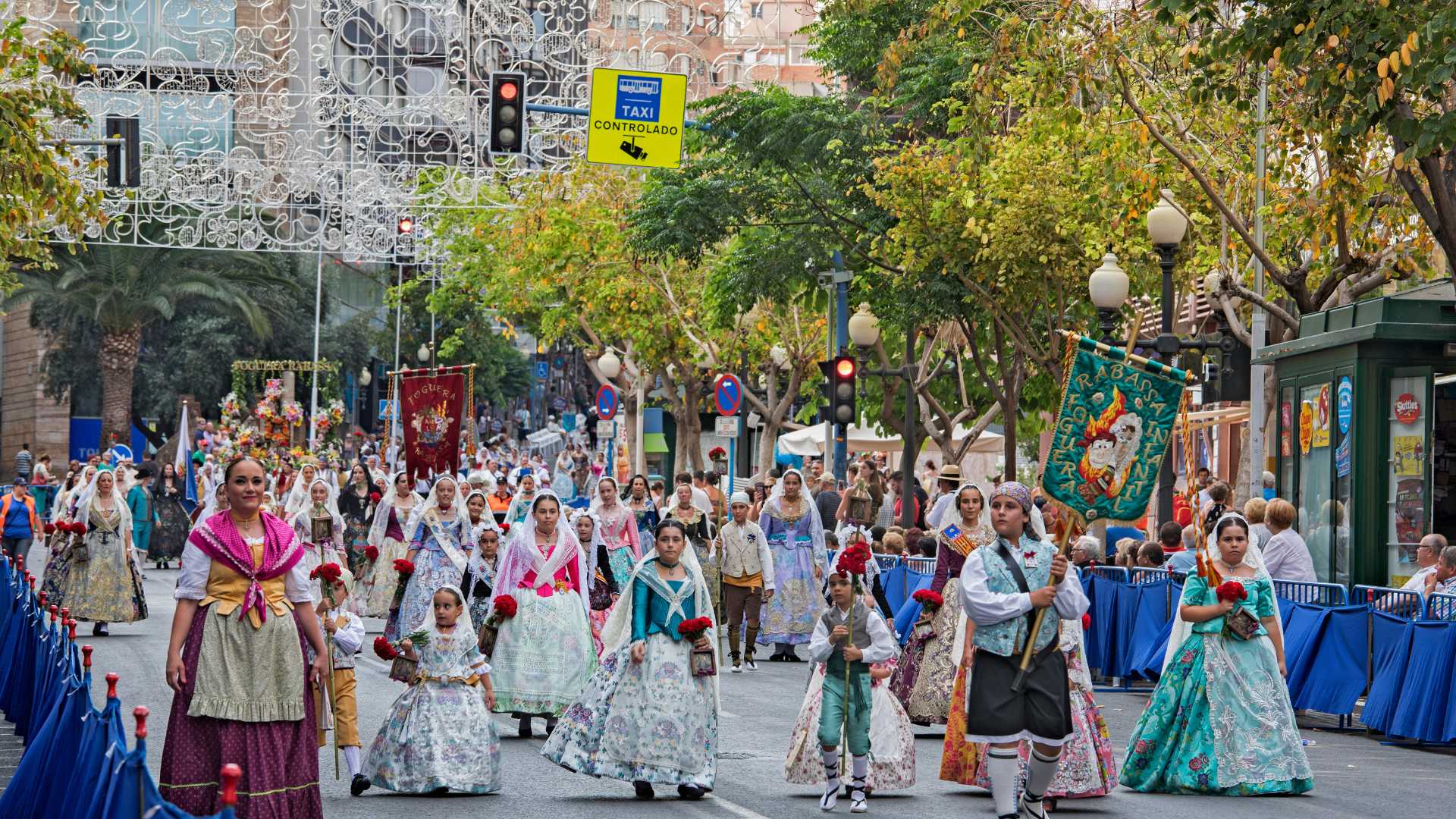
The parades: the festival committees dress in traditional clothing and, with brass bands playing alongside them, fill the streets with several parades a day, bringing the festive atmosphere to locals and visitors alike. Some parades, such as the Desfile del Ninot, include all the committees.
-
The Flower Offering: this moving, hugely popular event runs through the city centre to the Co-cathedral of San Nicolás de Bari, as the committees carry floral offerings to the Virgen del Remedio, the city’s patron saint.
-
The racons: in squares and streets across the city, you’ll come across these lively areas where there is always music and a brilliant atmosphere.
-
The Palmera: this fireworks display sends countless rockets up from Santa Bárbara Castle, creating a huge palm tree of light in the night sky and marking the start of the final act of Las Hogueras de San Juan on 24 June.
-
The Cremá and the banyà: after the Palmera, the hogueras are set alight and, as part of the fun, the firefighters join in by spraying the crowd with their hoses.
What time are the hogueras burnt? At midnight on the dot, the Palmera is launched and, after this spectacular signal, the Cremá begins with the official hoguera put up by the City Council, followed one by one by the hogueras in every neighbourhood.
The “Museo de Fogueres” collection in Alicante
To really understand how Las Hogueras de San Juan in Alicante is prepared and what it means to the city, we recommend visiting this exhibition at Casa de la Festa, where you can see how foguerer art has evolved over the years.
And now all that’s left is to make your trip to Alicante happen and throw yourself into the full burst of celebration that is Las Hogueras de San Juan. Start planning!




Come back

- Cookies policy
- Disclaimer
- Contact
- Accessibility
-
© Turisme Comunitat Valenciana, 2026.
All rights reserved.