




Abandoned Village of Jinquer: A Village Left Behind in the Sierra de Espadán
Published 16/11/2026
The abandoned village of Jinquer is an old hamlet, now deserted, with a magical atmosphere. It has Arab origins and lies in Alcudia de Veo, in the heart of the Sierra de Espadán Natural Park, in Castellón. Here’s the story behind it, how to get there, which walking routes pass through it and what remains can still be seen.
The abandoned village of Jinquer is the only uninhabited settlement in the municipality of Alcudia de Veo, in Castellón, which has three other inhabited settlements: Alcudia de Veo, Veo and Benitandús.
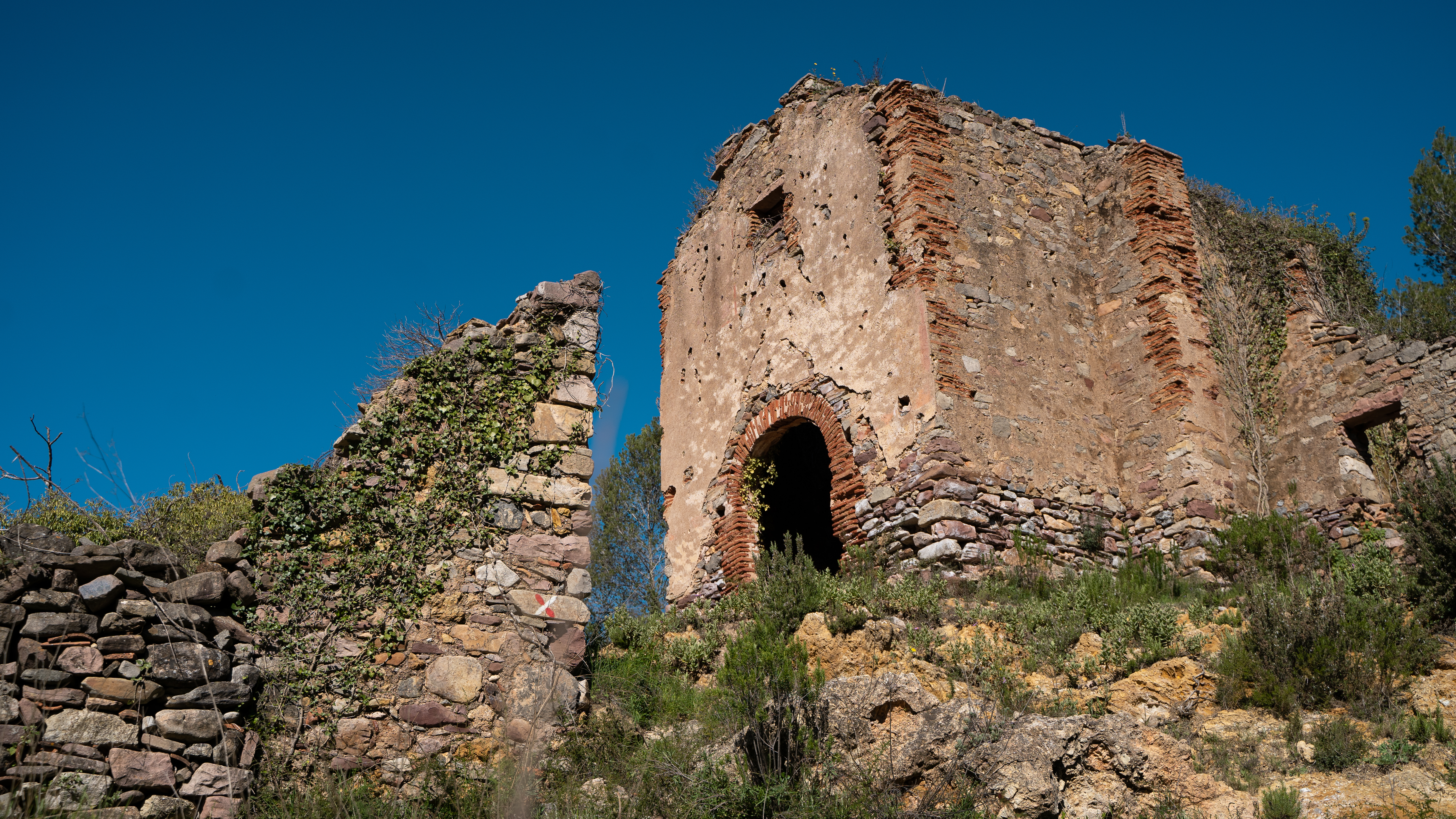
Evacuated during the Spanish Civil War, today it makes for an unusual visit, particularly for anyone interested in hiking and photography. You will love the atmosphere created by its roofless church, the ruined houses, the castle high above and the various trenches scattered across the Sierra de Espadán.
What is the abandoned village of Jinquer in Alcudia de Veo and what is its history?
Jinquer is a hamlet of Arab origin built on a small south-facing slope. Its population peaked in the early 20th century: in 1913 more than a hundred people lived there, spread over some thirty houses.
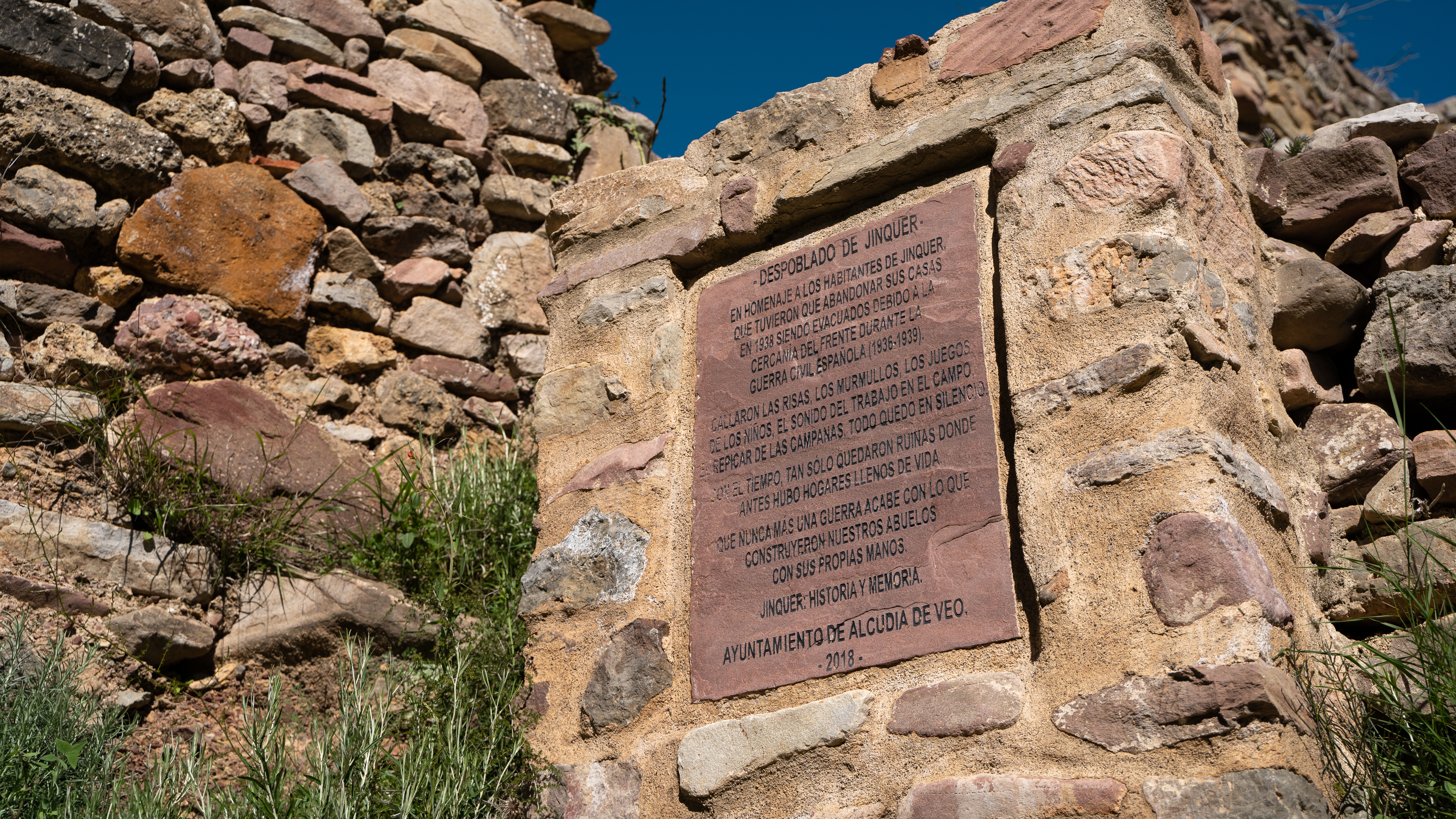
The village emptied during the Spanish Civil War. Its residents fled in the spring of 1938, and in 1939 only a few returned. Today the abandoned village is part of the Jinquer-La Almenarilla Memorial Complex, an initiative of the Alcudia de Veo Town Council that explains, with panels and signs, the circumstances of its abandonment.
How do you get to the abandoned village of Jinquer from Alcudia de Veo or the Sierra de Espadán?
You reach the abandoned village of Jinquer by following the GR-36 trail, along a track that climbs through pine forest to a fork near the village, where a path to the right leads down to the houses.
It is a route of about 5.1 km with panels and signs linking four emblematic sites connected to the Civil War. The abandoned village of Jinquer is the first stop on this route, and Puntal del Gordo is another.
What archaeological remains and ruins can be seen in the abandoned village of Jinquer?
-
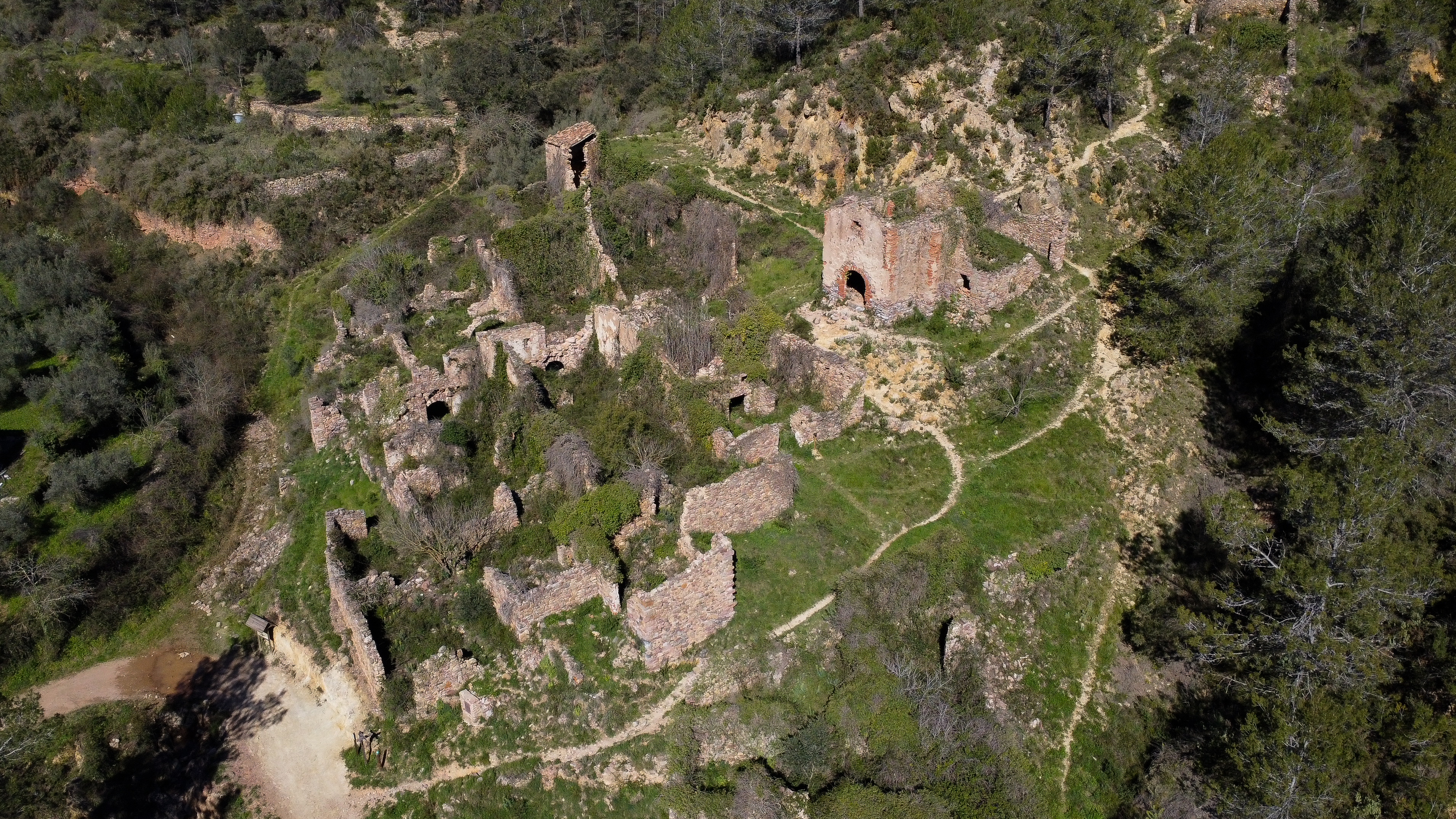
The church: Baroque in style and built with a single nave, it is the only building still standing. Although it has no roof, its outer walls and part of the altar remain. You enter through an arch in the main façade.
-
Houses, animal pens and threshing floor: the rest of the hamlet consists of ruined houses, animal pens and yards, a threshing floor and a number of springs.
-
Jinquer Castle: standing on a small lookout point above the valley, the castle is now completely ruined, although sections of its walls still survive. It cannot be accessed because of collapses and unstable ground, so it should only be viewed from outside.
-
Trenches and machine-gun nests: the surrounding area contains parapets, machine-gun nests and observation posts. Pine trees, holm oaks, cork oaks, poplars, chestnut trees and oaks grow throughout the landscape.
Is it safe to visit the ruins of Jinquer with children or in a group?
This is an outdoor visit through ruined buildings, so it is worth taking care, particularly with children or when visiting as a group. A few practical points to bear in mind:
-
Ruins: the church has no roof and the castle is not accessible, so the wisest approach is to look without going in.
-
Terrain: the route does not require climbing equipment, but there are some steep, narrow ascents and descents.
-
Orientation: between the abandoned village and the ridge, the path becomes faint and can sometimes be difficult to follow, so it is advisable to have the route saved on GPS.
The abandoned village of Jinquer is best visited without rushing, allowing yourself time to walk its streets and soak up the atmosphere created by the stone and the forest. Come and get to know it!

Come back

- Cookies policy
- Legal notice and privacy policy
- Contact
- Accessibility
-
© Turisme Comunitat Valenciana, 2026.
All rights reserved.