








Via Augusta in the Region of Valencia: a journey through history
Multimedia Gallery


Multimedia Gallery
- Cabanes, Vilanova d'Alcolea, La Pobla Tornesa, Benlloc, Sagunt/Sagunto, València, Montesa, Villena, Pilar de la Horadada, Petrer, Dénia
Join us on a route along the Via Augusta, an extraordinary monument that has stood the test of time and played a key role in shaping our history.
Exploring the Via Augusta in the Region of Valencia is far more than a walking or cycling route, it’s a chance to follow in the footsteps of a powerful civilisation over 2,000 years ago.
Stretching for almost 500 kilometres across Castellón, Valencia and Alicante, this ancient Roman road is now a vital route connecting landscapes, heritage and local flavours.
The Via Augusta in the Region of Valencia stands out for its excellent restoration as a shared walking and cycling path. Thanks to clear signposting and interpretation centres along the way, it’s perhaps the most accessible Roman route for today’s traveller in search of an authentic experience. Let us tell you more!
Where does the Via Augusta in the Region of Valencia start and end?
The Via Augusta in the Region of Valencia runs from north to south, stretching from the historic Maestrat area in Castellón down to La Vega Baja in Alicante, offering a perfect snapshot of the region’s diversity.
Following it is much more than a hike, it’s a journey along the backbone of history, through landscapes of ancient olive groves, Roman arches and towns rich in heritage.
Via Augusta in Castellón
-
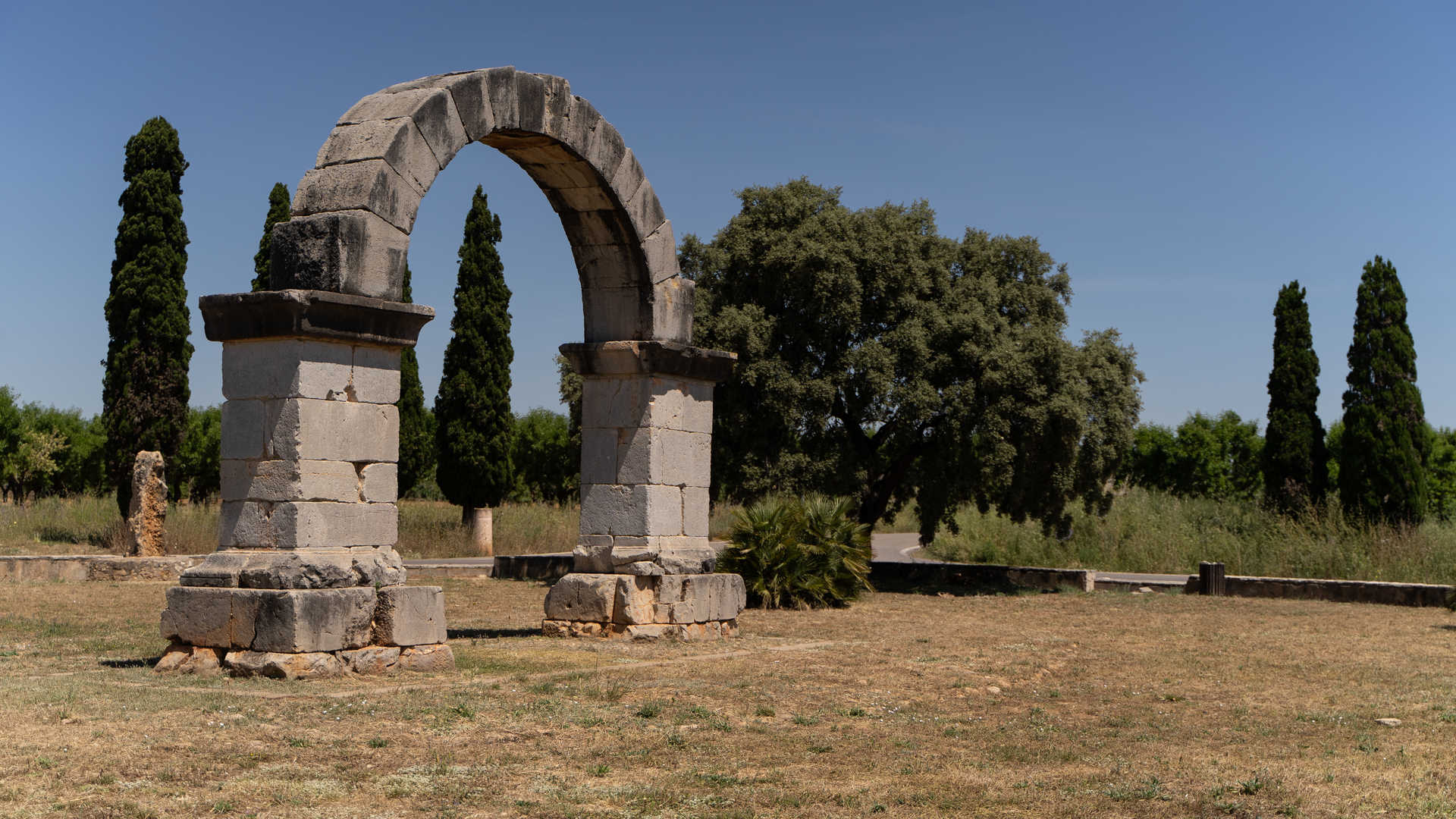
Roman Arch of Cabanes: a 2nd-century AD honorary monument that once marked the route of the Via Augusta.
-
Route between Vilanova d'Alcolea and La Pobla Tornesa: an 8 km stretch where original sections of the Roman road remain, along with miliaria—the stone markers used to indicate distances.
-
Benlloc: here, the Via Augusta is known as the Camí dels Romans, and a restored 50-metre stretch remains where Roman engineering can be seen out in the open.
Via Augusta in Valencia
-
Sagunto: don’t miss the Roman Theatre and the remains of the porticoed road linked to this stretch of the Via Augusta.
-
València: along Calle San Vicente Mártir, eight stone cylinders mark the original route heading south.
-
Albufera Natural Park: explore the signposted Via Augusta route through this beautiful wetland, or follow the route between Montesa and the original Roman road.
Via Augusta in Alicante
-
Route between Villena and La Font de la Figuera: along rural paths and trails, you’ll find information about the remains of this historic road.
-
Recovered miliaria in Pilar de la Horadada and Petrer: these monuments once marked distances and locations for Roman travellers.
-
Via Dianium: a branch of the Via Augusta that connected to the coast, with remains discovered in places such as Dénia.
If you’re looking for an experience that combines sport, culture and a true journey back in time, the Via Augusta is waiting to be explored. Discover it for yourself!
Come back

- Cookies policy
- Disclaimer
- Contact
- Accessibility
-
© Turisme Comunitat Valenciana, 2026.
All rights reserved.